Start Your Style Journey!

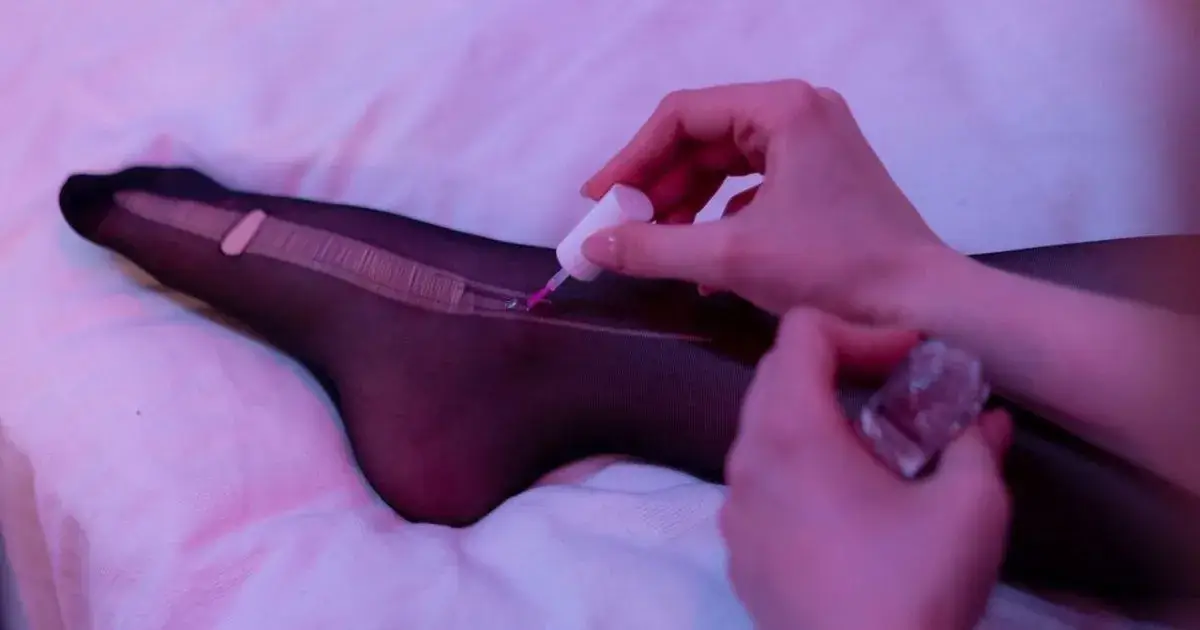
How to Fix Leggings: Holes, Tears, and Split Seams

A hole in your favorite leggings does not always mean you need to replace them. Small holes, tears, and loose seams can often be repaired at home, but the best method depends on the size and location of the damage.
Because leggings are made from stretchy knit fabrics, the repair needs to move with the material. A rigid repair can crack, feel uncomfortable, or cause the surrounding fabric to tear again.
Here are the most practical ways to fix a hole in leggings.
Can You Fix a Hole in Leggings?
Yes. Small holes and short tears are usually repairable if the surrounding fabric is still strong.
Before repairing them, check:
- Hole size: Small holes are easier to repair cleanly.
- Location: A hole in the middle of the thigh is easier to repair than one along the crotch or waistband.
- Seam damage: A separated seam needs to be stitched back together rather than simply patched.
- Fabric condition: If the area around the hole is thin, stretched out, or worn through, the damage can return even after a successful repair.
For stretch fabrics, the repair should preserve some of the garment’s natural flexibility. Sewing references for knit fabrics commonly recommend stretch-compatible stitches such as a narrow zigzag or other elastic stitch.
What You Need to Fix a Hole in Leggings
For a basic repair, gather:
- Needle and matching polyester thread
- Small scissors
- Flexible fabric adhesive, if you prefer a no-sew repair
- A small piece of similar stretch fabric for larger holes
- Sewing machine with a zigzag or stretch stitch, if available
Always test an adhesive or repair method on an inconspicuous area first, especially with delicate or specialty fabrics.
How to Fix a Hole in Leggings by Hand
Hand sewing is a good option for a small hole where the surrounding fabric is still intact.
Step 1: Turn the leggings inside out
This makes the repair easier to hide and lets you work from the less visible side.
Step 2: Bring the edges together
Gently align the damaged edges. Do not pull the fabric tightly while doing this.
Step 3: Sew with small stitches
Use matching thread and make small, close stitches around the opening. Avoid pulling the thread so tightly that the fabric puckers.
The goal is to close the opening without creating a hard, tight section that prevents the leggings from stretching normally.
Step 4: Secure the thread
Finish with a secure knot on the inside and trim the excess thread.
Step 5: Test the repair
Gently stretch the fabric by hand. The repaired area should move with the fabric rather than feeling tight or rigid.
How to Fix Leggings With a Sewing Machine
A sewing machine is particularly useful when a seam has split or the damaged area experiences a lot of stretching.
Use a zigzag or stretch stitch instead of relying on a standard straight stitch alone. Stretch-specific stitches are designed to accommodate movement in knit fabrics, and Brother’s sewing guidance specifically recommends stretch and zigzag stitches for stretch materials.
For a split seam:
- Turn the leggings inside out.
- Align the original seam.
- Remove loose or broken thread.
- Sew along the existing seam with a zigzag or suitable stretch stitch.
- Reinforce the beginning and end.
- Trim loose threads.
Do not stretch the fabric aggressively while sewing. The fabric should remain naturally positioned as the machine stitches it.
How to Fix a Hole in Leggings Without Sewing
For a small hole in a low-stress area, a flexible fabric adhesive can be a useful alternative to stitching.
Choose an adhesive specifically designed for fabric that remains flexible after drying. Fabric adhesives marketed for stretch materials are formulated to retain some flexibility rather than creating a rigid bond.
How to use fabric glue:
- Wash and completely dry the leggings according to their care instructions.
- Turn them inside out.
- Lay the damaged area flat without stretching it.
- Apply a thin layer of flexible fabric glue around the damaged area or to an inside patch.
- Press the fabric together.
- Allow the adhesive to cure for the full time specified by the manufacturer.
Do not use more adhesive than necessary. A thick layer can leave a stiff or visible patch.
Fabric glue is less appropriate for a major tear or a heavily stressed structural seam. Those areas generally benefit from stitching or reinforcement.
How to Patch a Larger Hole in Leggings
A larger hole may need more than simply bringing the edges together.
For this repair, use a small piece of lightweight, stretchy fabric that closely matches the leggings.
- Turn the leggings inside out.
- Cut the patch slightly larger than the damaged area.
- Round the patch corners so they are less likely to lift.
- Position it behind the hole.
- Secure it with flexible fabric adhesive, stitching, or both.
- Let the repair fully set before wearing the leggings.
For a larger or high-stress repair, a patch combined with stretch stitching provides more structural support than adhesive alone.
How to Fix a Hole in the Inner Thigh or Crotch
Holes around the inner thigh, crotch, and waistband are more difficult because these areas experience repeated stretching and friction.
A simple glue-only repair is unlikely to be the best long-term solution for substantial damage in these locations.
Instead:
- Reinforce the damaged area from the inside.
- Use a stretch-compatible fabric patch.
- Stitch with a zigzag or other appropriate stretch stitch when possible.
- Check whether the surrounding fabric is already thinning.
A repaired seam should retain its flexibility. Repair guidance for athletic leggings specifically recommends zigzag stitching to preserve stretch in damaged flat seams.
Can You Iron a Patch Onto Leggings?
You can use a heat-applied patch only when the patch and garment can safely tolerate the required heat.
Leggings often contain synthetic stretch fibers, so do not assume that a normal iron setting is safe. Follow the garment’s care label and the patch manufacturer’s temperature and application instructions.
For a delicate or heat-sensitive pair, an adhesive or sewn patch may be a safer option than applying direct heat.
Should You Use Super Glue to Fix Leggings?
A rigid adhesive is not a good general-purpose repair for stretchy fabric.
Leggings need to flex repeatedly. A repair that dries hard can become a stiff spot that does not move naturally with the fabric.
Use a flexible fabric adhesive specifically intended for clothing and stretch materials instead.
How to Make the Repair Less Noticeable
For a cleaner result:
- Repair from the inside whenever possible.
- Match the thread or patch color to the leggings.
- Keep stitches small and even.
- Avoid excessive glue.
- Match the patch material as closely as possible to the original fabric.
- Keep the repaired area flat while the adhesive cures.
For black or other smooth, fitted leggings, even a small amount of excess adhesive or bulky stitching can be noticeable.
Why Do Leggings Keep Getting Holes?
If the same area repeatedly develops holes, the problem may be larger than the original tear.
Look for:
- Thin or worn fabric around the damaged area
- Repeated friction at the inner thighs
- Excessive tension around the crotch or waistband
- Seams beginning to separate
- Loss of elasticity from prolonged wear
If the surrounding fabric is deteriorating, repairing one hole may only provide a temporary fix.
How to Prevent Holes in Leggings
You can reduce unnecessary wear by following the garment’s care instructions and handling the fabric gently.
In particular:
- Wash leggings according to the care label.
- Avoid unnecessary high heat when the garment instructions advise against it.
- Do not pull aggressively on thin areas when putting them on.
- Inspect high-friction areas when you notice thinning.
- Repair small damage before it develops into a larger tear.
Which Repair Method Should You Use?
| Problem | Best starting point |
|---|---|
| Small hole | Hand sewing |
| Tiny hole in a low-stress area | Flexible fabric adhesive |
| Split seam | Zigzag or stretch stitching |
| Larger hole | Stretch-fabric patch |
| Inner-thigh or crotch damage | Reinforced patch + stretch stitching |
| Temporary/emergency damage | Fabric repair tape, following product instructions |
FAQs
Can you fix a hole in leggings without sewing?
Yes. A flexible fabric adhesive can work for small holes, particularly when the surrounding fabric remains strong. Larger or high-stress damage usually needs reinforcement.
What is the best way to fix a hole in stretchy fabric?
The repair should preserve the fabric’s ability to stretch. For many holes, that means using stretch-compatible stitching or a flexible adhesive rather than a rigid repair.
What is the best way to fix a hole in stretchy fabric?
The repair should preserve the fabric’s ability to stretch. For many holes, that means using stretch-compatible stitching or a flexible adhesive rather than a rigid repair.
Can you fix ripped leggings at the seam?
Yes. A split seam can usually be resewn along the original seam. A zigzag or stretch stitch is preferable for maintaining elasticity.
How do you fix a hole in leggings without it showing?
Repair the damage from the inside, use matching thread or fabric, and keep the repair thin and flat. Excess glue and bulky stitching are more likely to make the repair visible.
When should you replace leggings instead of repairing them?
Consider replacing them when the fabric is thinning across a larger area, multiple repairs are failing, or the leggings have lost substantial stretch and recovery. A repair cannot restore fabric that has already worn out throughout the garment.